Cellar Keeper Beginner Guide
Everything you need before sorting your first rack of 2,448 bottles.
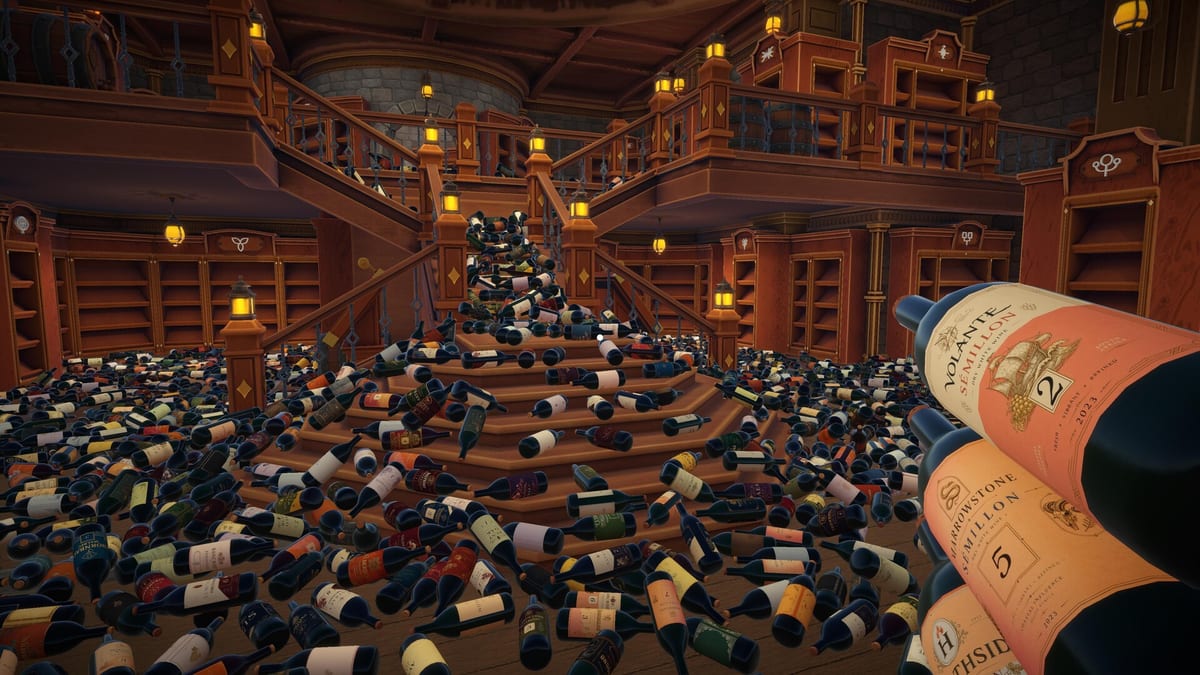
Cellar Keeper launches you into a beautiful mess: 2,448 wine bottles scattered across a collector’s cellar while a cursed man watches from a cage in chicken form. EgoTrampoline’s cozy organizing sim (Steam app 4935510, released August 6, 2026) asks you to restore order bottle by bottle. This getting started guide covers the systems you need in your first hour so you are not guessing why a shelf flashes gray or why a cabinet refuses your Pinot.
Take a breath. The game is large, but each interaction is straightforward once you know what the labels and map symbols mean.
What you are trying to do
Every bottle belongs on a specific rack or cabinet determined primarily by wine type — the second line printed on the label. The first line is brand, and a series number such as 4/9 tells you how many bottles exist in that set. Your long-term goal is to place all 2,448 bottles correctly while optionally freeing the collector from his curse, a story thread explained further in How to Free the Keeper.
Short term, focus on one cabinet at a time. Completing shelves grants skill points in Cozy Mode, and finishing smaller shelves first is the fastest way to unlock your first upgrades — a priority covered in How to Prioritize Skills.
Reading bottle labels
Labels display three key pieces of information in a fixed order:
- Brand (top line) — identifies the winery or product line.
- Wine type (second line) — the variety you match to cabinet symbols on the map. This is the line to memorize when you are unsure where to walk.
- Series number (such as 4/9) — helps you gather complete sets and spot missing bottles in a brand run.
When two bottles share a brand but different types, they go to different cabinets. When two bottles share a type but different brands, they may share a cabinet zone but land on different shelves depending on shelf-claim rules.
The central map and cabinet symbols
Open the central map early and often. It translates abstract cabinet icons into wine types so you are not running across the cellar with ten bottles looking for a match. Each cabinet symbol corresponds to a variety category; cross-reference the symbol before you pick up a batch.
If you want a full sorting workflow built around the map, continue to How to Organize Bottles after this page. That guide goes deeper on batching routes and avoiding wrong-room trips.
Carrying bottles and the left-side list
You can hold up to ten bottles at once. The left-side carry list shows everything in your hands in pickup order. Use it to verify you are not mixing brands before a long walk, especially after a Batch Grab upgrade in Cozy Mode.
Pick up bottles near each other, walk once, place in sequence. Backtracking is the biggest time sink for new players.
Placing bottles on shelves
Cabinets contain multiple shelves. Critical rule: the first bottle placed on a shelf claims that shelf for its brand. Later bottles of the same brand must use that shelf; other brands cannot share it even if empty slots remain visually tempting.
When you insert a bottle correctly, the game flashes yellow feedback. Wrong cabinet or wrong shelf alignment triggers a gray flash. Treat gray as a full stop — fix the placement before grabbing more bottles, or you will cascade partial shelves that block completion rewards.
Game modes at a glance
Three modes shape how punishing mistakes feel:
- Cozy Mode — unlock and upgrade seven skills up to five times each. This is the recommended first playthrough.
- Speedrun Mode — no upgrades; compete on leaderboards with raw movement and routing skill.
- Hardcore Mode — bottles can break if dropped or mishandled, adding tension to every carry.
Cozy Mode vs Speedrun Mode breaks down when to switch modes and what you lose or gain. Most beginners should stay in Cozy until the cellar layout feels familiar.
Your first session checklist
- Open the map and note two nearby cabinets plus their wine-type symbols.
- Pick up no more than ten bottles that match those types.
- Place one bottle per shelf to claim brands cleanly.
- Finish a small shelf for early skill points.
- Spend points on Batch Grab or Spot Matches — see the Skills Tier List for why those two lead most builds.
Optional tip: some players refresh skill cooldowns by quitting and relaunching the game between heavy sorting pushes. It is not required, but worth knowing if a cooldown gates your next burst.
Where to go next
Once movement and placement feel natural, read How to Organize Bottles for advanced routing, then How to Complete the Cellar when you are past the halfway mark. Skill-focused players should jump to How to Prioritize Skills and the Spot Matches page for ability details.
Cellar Keeper rewards calm repetition. Learn the label order, trust the map, and let yellow flashes confirm you are on the right shelf.
Frequently Asked Questions
Quick answers to the most common questions.
What does the second line on a Cellar Keeper label mean?
The second line is the wine type — the variety you match to cabinet symbols on the central map. It is usually more important than brand when choosing a destination.
How many bottles can I carry at once in Cellar Keeper?
You can carry up to ten bottles. The left-side carry list tracks your current haul so you can verify brands before walking to a cabinet.
What do yellow and gray flashes mean when placing bottles?
Yellow means correct placement on the right shelf and cabinet. Gray means something is wrong — recheck the wine type symbol and whether the shelf is already claimed by another brand.
Which mode should beginners play first?
Cozy Mode is best for learning because it unlocks skills like Batch Grab and Spot Matches. Compare all modes in [Cozy Mode vs Speedrun Mode](/guides/cozy-vs-speedrun/).
How do I earn skill points early?
Complete shelves in Cozy Mode. Smaller shelves finish faster and pay out skill points sooner — prioritize them before tackling huge wall racks.